PROTEIN
Emphasizes rebuilding
Provides amino-acid building material while the body still needs energy to perform repair.
Fuel enters one shared system, then the body continually routes, stores and releases it according to current needs.
ProteinRepair material
 CarbohydratesGlucose + glycogen
 FatsEnergy + reserve
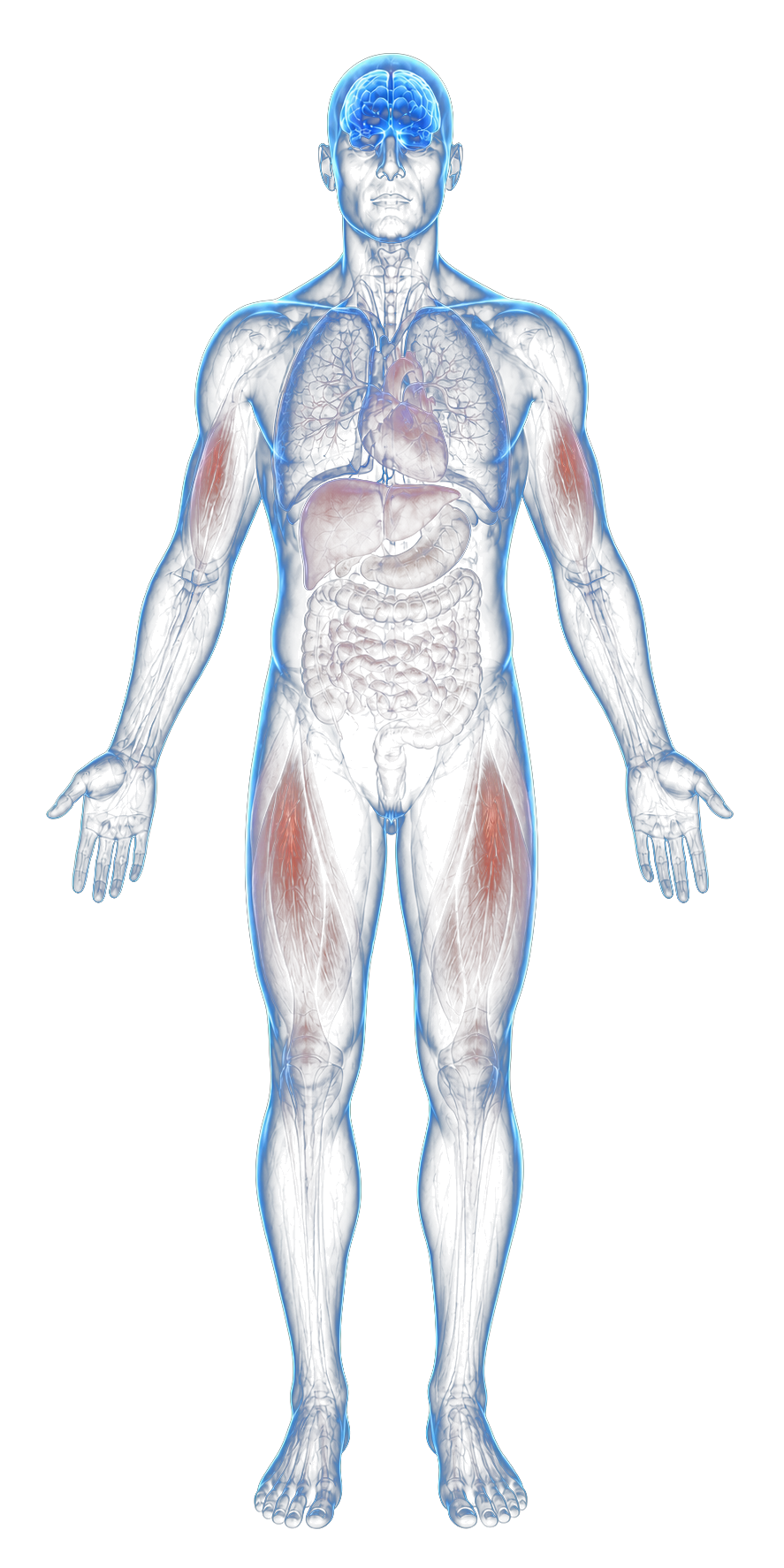
 Brain
Brain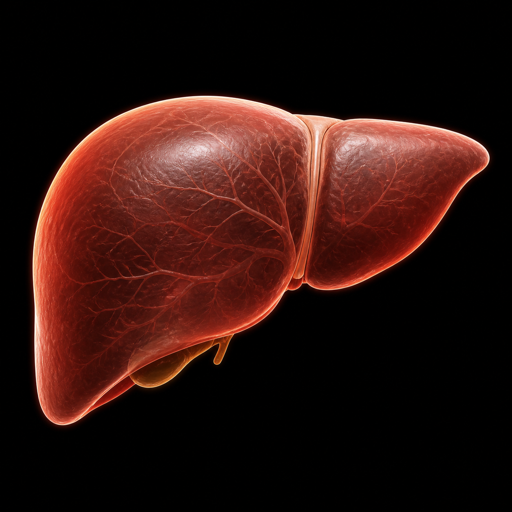 Liver
Liver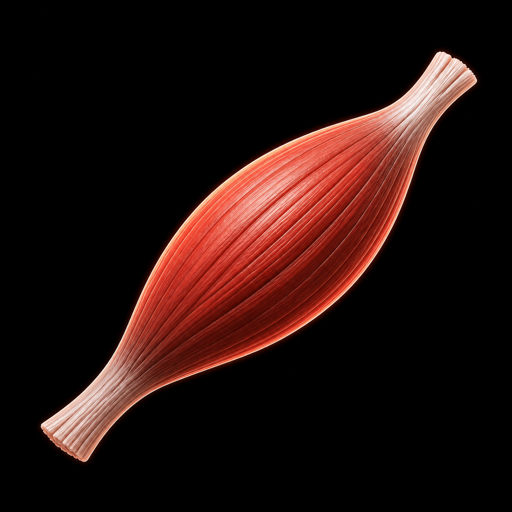 MusclesRepair
 Glycogen
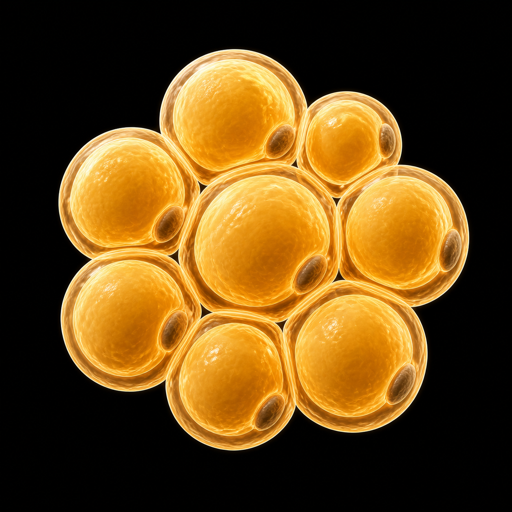 Fat reserve
The routes show relative relationships—not literal pipes or exact calories traveling to one tissue.
The explorer translates each broad food example into approximate fuel inputs, then combines the whole day before the routing model responds.
Each tile is a fixed representative portion for comparing model tendencies. Selecting it again adds another portion.
They are not measurements of a specific brand, recipe, restaurant meal, digestion rate, or recommendation about what to eat.
The model interprets combined daily inputs. Breakfast, lunch, and dinner labels are for recognition; meal timing is not simulated.
Each input can support several destinations; the bright pathway shows its strongest emphasis in this model.
Provides amino-acid building material while the body still needs energy to perform repair.
Raises glucose availability and helps refill conceptual muscle and liver glycogen stores.
Contributes concentrated energy and can also move into—or later return from—longer-term storage.
Change the kind of day to see why the same incoming fuel can produce a different routing picture.
Everyday pull
Everyday movement leaves a moderate pool available while some fuel continues toward storage and maintenance.
These signals can rise together. A brighter response is an emphasis—not proof that one fuel goes only there.
Continuous priority for available glucose and energy support.
Converts, stores and releases fuel as the larger system changes.
Activity raises the immediate pull from available and stored fuel.
Activity creates the signal; protein, available energy and repeated time shape support.
Conceptual quick-access carbohydrate reserves in muscle and liver.
Energy routed toward longer-term reserve in this conceptual model—not measured body-fat change.
Stored reserves released can contribute to current energy needs—the response labeled Fat as Fuel—when demand exceeds incoming supply.
Energy Reserve
Receiving surplus
When supply remains above current demand, storage pressure rises over time.
They are teaching levers for supply, demand and repeated patterns—not a personal prescription.
Compares the selected example or manual scenario with a target direction; it does not personalize fuel or demand values.
A shared calorie budget built from 4 / 4 / 9 kcal per gram, not calories assigned to exact tissues.
Lock a value you want to hold; unlocked macros share the remaining budget from a proposed—not “correct”—balance.
This is a derived response in the explorer—not a separate dial or a readiness score.
Repeats the same pattern in the model so longer-term storage, release and repair tendencies become easier to see.
The same supply signal means something different depending on whether the target is higher, similar or lower.
For a higher target, supply above demand points in the intended direction.
Leans lower than 179
Supply remains near modeled demand
Leans higher toward 190
Direction only: the explorer does not predict how much weight changes, how quickly it changes, or exactly where stored energy goes.
Generalized tendencies between fuel supply, tissue demand, storage, release and repeated patterns.
An exact diet, measured metabolism, calories sent to one tissue, medical advice or an individual outcome.